HOME >> PRODUCTS >> ELECTRIC HOIST >> ELECTRIC CHAIN HOIST
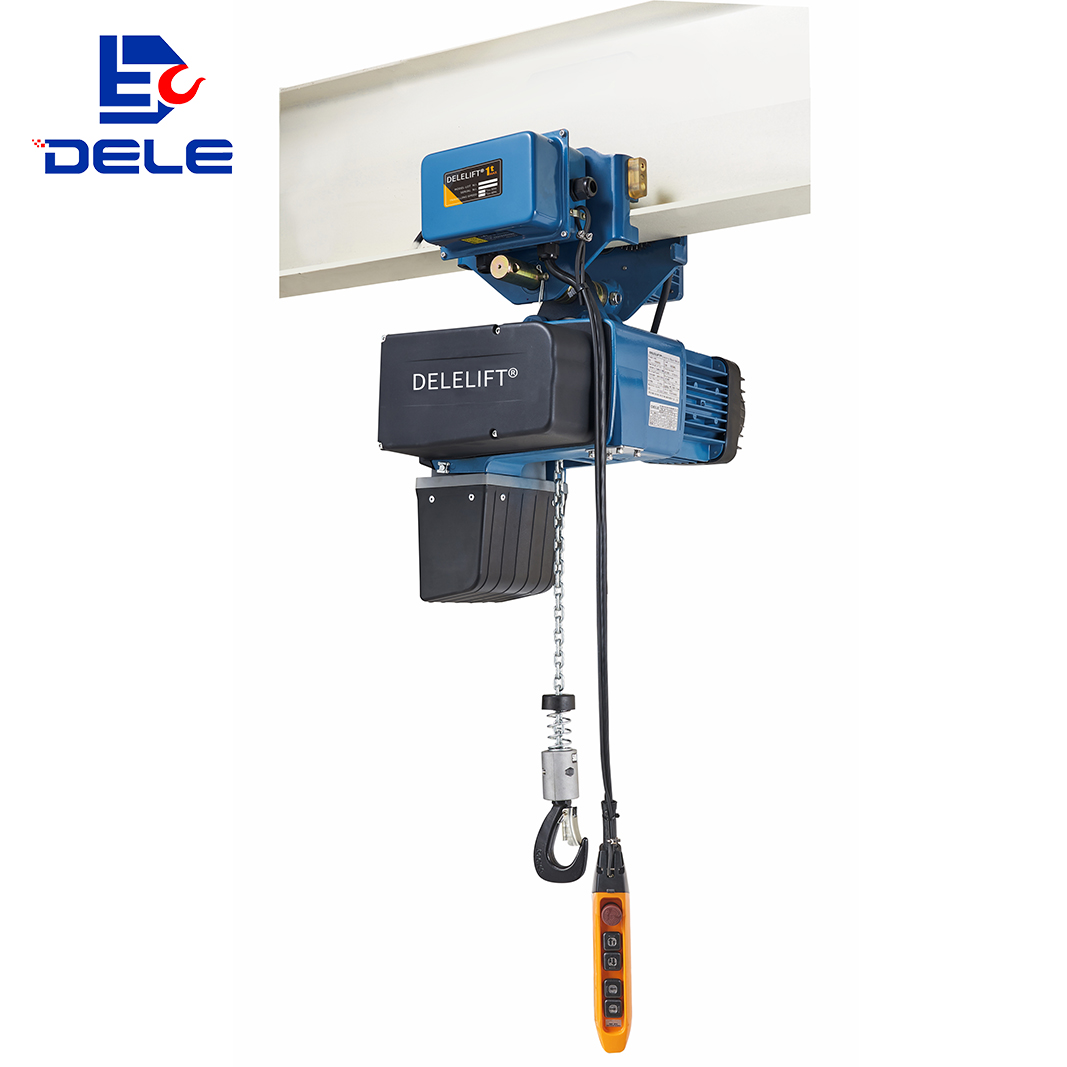
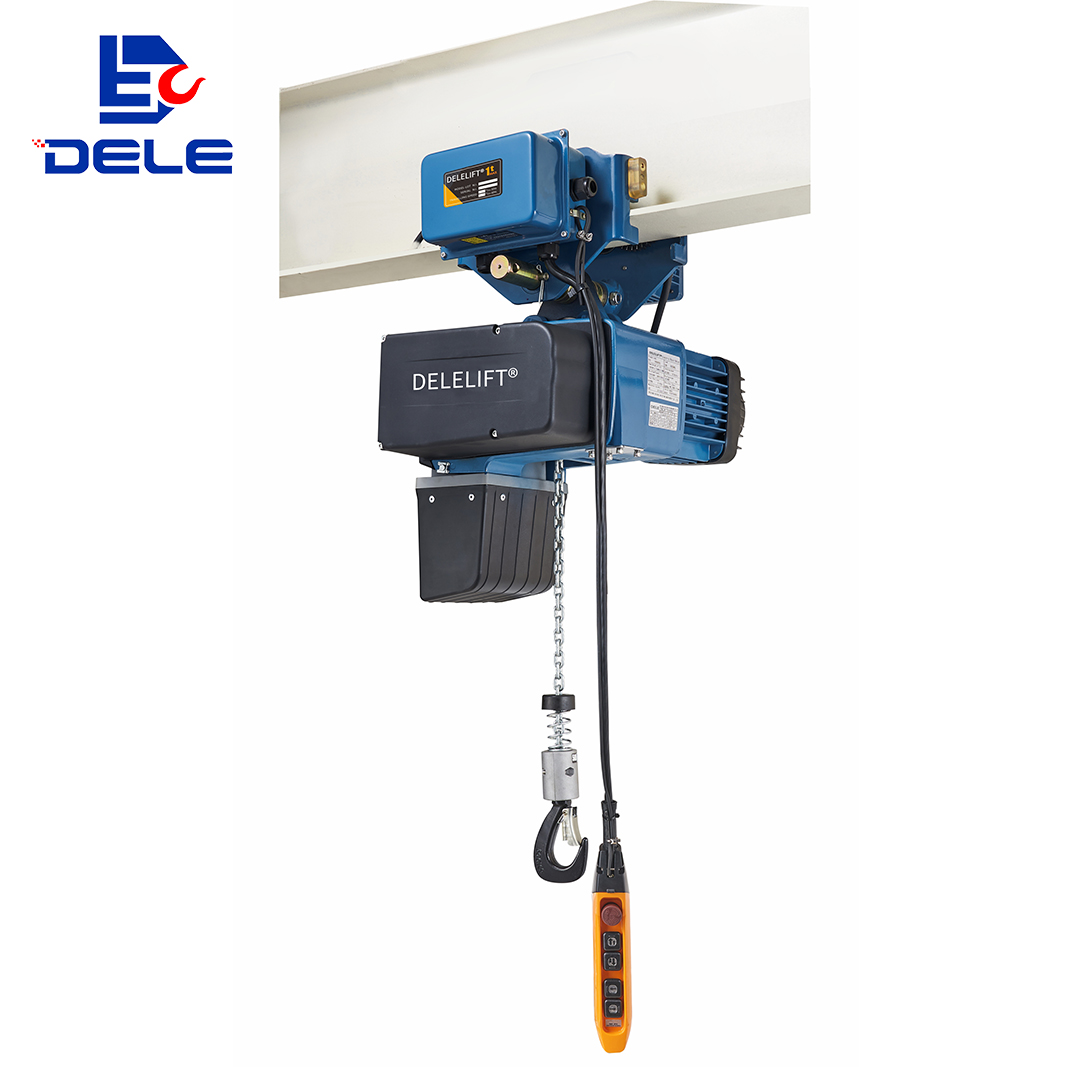
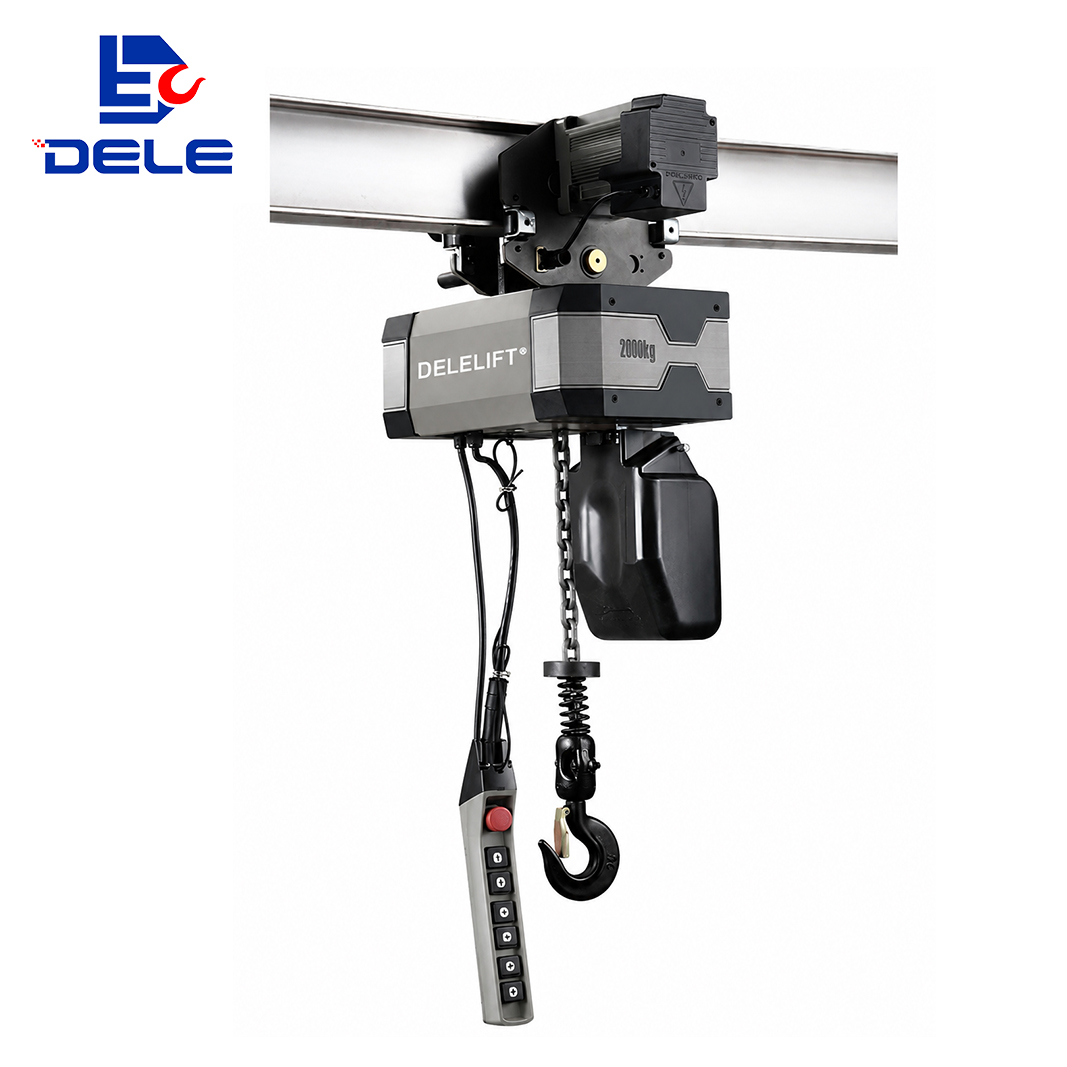
A motor‑driven electric trolley mounted electric chain hoist that travels along I‑beam runways — built for monorail cranes and single‑girder systems requiring flexible horizontal traversing, beyond stationary point‑only lifting operations.
●The F‑series low‑headroom electric chain hoist features an optimised housing structure. Paired with high‑performance motor, gear reducer and compact electronic control system, it maximises the lifting height of loads within confined spaces.
●The F‑series low‑headroom electric chain hoist may be employed independently or integrated with monorail hangers, jib cranes, KBK systems and similar equipment for diverse applications, including production‑line assembly operations, single‑station lifting tasks, and wind‑power equipment maintenance.
●The F‑series low‑headroom electric chain hoist supports selectable input voltage ranging from 220V to 460V, coupled with standard 36V safety control voltage (24V / 48V configurations optional), delivering greater flexibility for global customers.
●The F‑series low‑headroom electric chain hoist is compatible with multiple intelligent control systems to suit diverse working scenarios, satisfying personalised requirements from different end‑users.
Featuring a high-performance motor, precision gearbox and compact electronic control system, the optimized body structure maximizes the load lifting height even in confined or low-ceiling spaces, making it ideal for space-restricted operations. **2. Wide Range of Applications**
The F-series hoist can be used independently or combined with monorail suspension, cantilever cranes, KBK workstations, and other systems. It is widely applied in product assembly lines, single-station lifting operations, and wind power equipment maintenance.
Input voltage is selectable within the 220–460V range, with a standard safety control voltage of 36V (24V/48V optional), offering flexible power supply options to meet the electrical and safety standards of users across different countries and regions.
For diverse application scenarios, the hoist can be integrated with various intelligent control systems, enabling remote control, interlock protection, and other customized configurations to meet the individualized needs of different users.
Choose the electric trolley version when loads must be moved horizontally along the track frequently, over long distances, or at heavy capacities — while the fixed-type hoist remains a more economical choice for stationary vertical lifting only.
Which model fits your job? Selecting the right electric hoist configuration depends on two key factors: whether horizontal movement is required and whether working space is limited. If the load is only lifted and lowered vertically at a fixed point, the fixed-type hoist offers the most economical solution. For infrequent, light-duty, short-distance travel along the rail, a manual trolley model delivers the best value. Where movement is frequent, loads are heavy, or travel distance is long, the electric trolley version is recommended to enable efficient, remote-controlled automated operations. When the workshop has limited headroom and maximum lifting height is a priority, the low-headroom design is the ideal choice. These options can be combined — for example, a low-headroom hoist with an electric trolley — to address both compact-space and frequent-movement requirements simultaneously.Compare: DLDM with manual trolley Compare: DLDME with electric trolley
Capacity, lifting speed, power, voltage and travel speed by model
| Type | Capacity (Ton) | Lifting height (m) | Lifting speed (m/min) | Lifting Motor | Traveling Motor | Turn radius (mm) | I-Beam (mm) | ||||||
| Power (Kw) | Rotation speed(r/min) | Phases | Voltage (V) | Frequency (Hz) | Power (kW) | Rotation speed(r/min) | Traveling speed (r/min) | ||||||
| DLDME0012501F | 0.125 | 3/9 | 8/2 | 0.4/0.1 | 2880/720 | 3 | 220-460 | 50/60 | 0.25 | 1440 | 20 | 1300 | 58-153 |
| DLDME 002501F | 0.25 | 3/9 | 8/2 | 0.4/0.1 | 2880/720 | 3 | 220-460 | 50/60 | 0.25 | 1440 | 20 | 1300 | 58-153 |
| DLDME 00301F | 0.3 | 3/9 | 13/3.2 | 0.75/0.2 | 2880/720 | 3 | 220-460 | 50/60 | 0.25 | 1440 | 20 | 1300 | 58-153 |
| DLDME 00501F | 0.5 | 3/9 | 8/2 | 0.75/0.2 | 2880/720 | 3 | 220-460 | 50/60 | 0.25 | 1440 | 20 | 1300 | 58-153 |
| DLDME00502F | 0.5 | 3/9 | 4/1 | 0.4/0.1 | 2880/720 | 3 | 220-460 | 50/60 | 0.25 | 1440 | 20 | 1300 | 58-153 |
| DLDME 00602F | 0.6 | 3/9 | 6.5/1.6 | 0.75/0.2 | 2880/720 | 3 | 220-460 | 50/60 | 0.25 | 1440 | 20 | 1300 | 58-153 |
| DLDME0102F | 1 | 3/9 | 4/1 | 0.75/0.2 | 2880/720 | 3 | 220-460 | 50/60 | 0.4 | 1440 | 46346 | 800 | 58-153 |
| DLDME0101F | 1 | 3/9 | 8/2 | 1.5/0.4 | 2880/720 | 3 | 220-460 | 50/60 | 0.4 | 1440 | 46346 | 800 | 58-153 |
| DLDME0202F | 2 | 3/9 | 4/1 | 1.5/0.4 | 2880/720 | 3 | 220-460 | 50/60 | 0.4 | 1440 | 46346 | 800 | 82-178 |
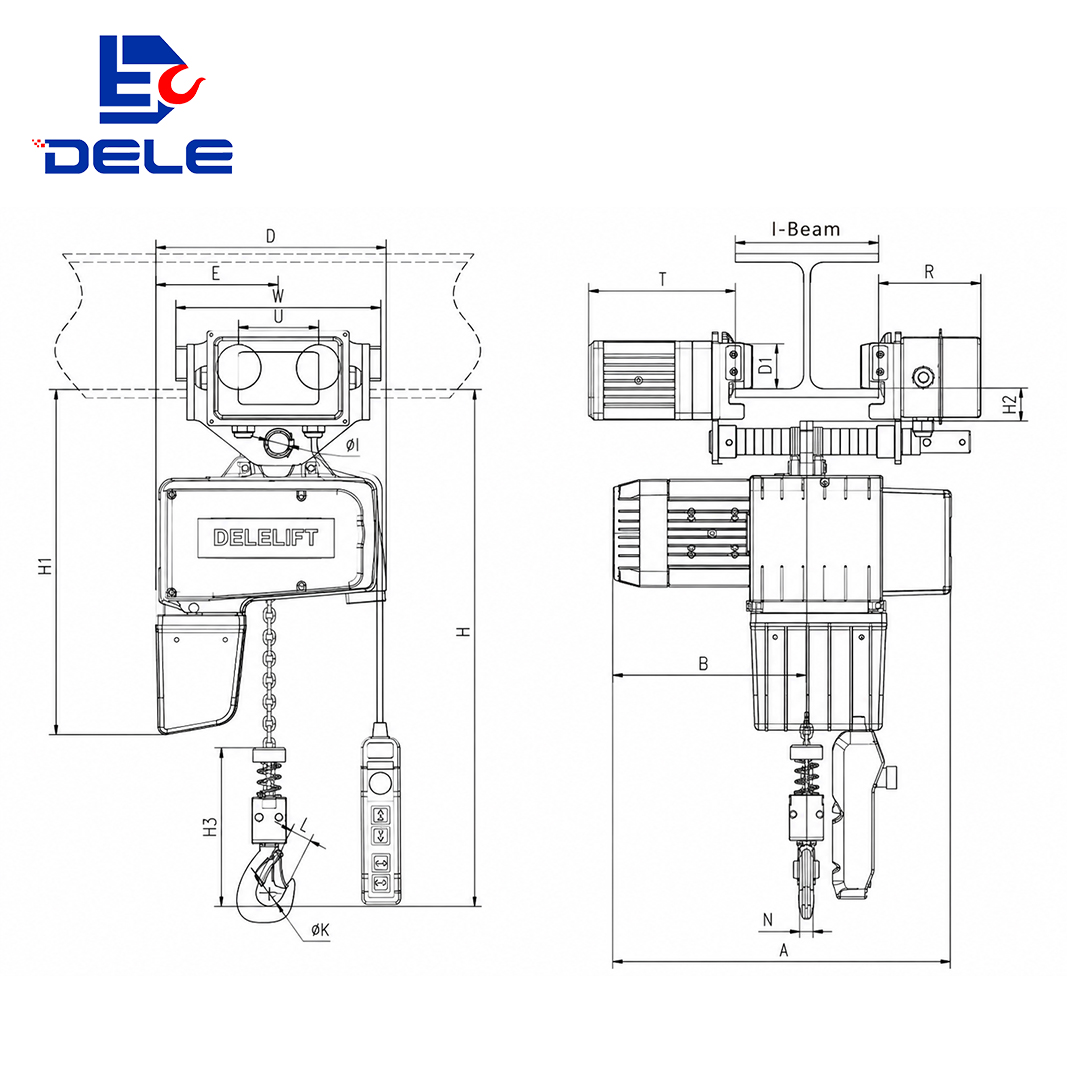
| Type | Capacity (Ton) | Unit(mm) | Chain Dia.x chain falls | ||||||||||||||||
| H | H1 | H2 | H3 | A | B | D | D1 | E | I | K | L | N | R | T | U | W | |||
| DLDME0012501F | 0.125 | 460 | 460 | 42 | 206 | 441 | 241 | 301 | Φ62 | 159 | Φ31 | Φ29 | 28 | 17 | 142 | 209 | 111 | 285 | Φ5.0×1 |
| DLDME002501F | 0.25 | 460 | 460 | 42 | 206 | 441 | 241 | 301 | Φ62 | 159 | Φ31 | Φ29 | 28 | 17 | 142 | 209 | 111 | 285 | Φ5.0×1 |
| DLDME00301F | 0.3 | 497 | 463 | 42 | 221 | 471 | 266 | 319 | Φ62 | 170 | Φ31 | Φ36 | 30 | 20 | 142 | 209 | 111 | 285 | Φ5.0×1 |
| DLDME00501F | 0.5 | 497 | 463 | 42 | 221 | 471 | 266 | 319 | Φ62 | 170 | Φ31 | Φ36 | 30 | 20 | 142 | 209 | 111 | 285 | Φ5.0×1 |
| DLDME00502F | 0.5 | 525 | 517 | 42 | 271 | 441 | 241 | 301 | Φ62 | 159 | Φ31 | Φ42 | 35 | 25 | 142 | 209 | 111 | 285 | Φ5.0×2 |
| DLDME00602F | 0.6 | 538 | 513 | 42 | 271 | 471 | 266 | 326 | Φ62 | 170 | Φ31 | Φ42 | 35 | 25 | 142 | 209 | 111 | 285 | Φ5.0×2 |
| DLDME0102F | 1 | 538 | 503 | 20 | 271 | 471 | 266 | 326 | Φ95 | 170 | Φ31 | Φ42 | 35 | 25 | 169 | 252 | 111 | 285 | Φ5.0×2 |
| DLDME0101F | 1 | 563 | 567 | 20 | 241 | 569 | 306 | 340 | Φ95 | 183 | Φ31 | Φ42 | 35 | 25 | 169 | 252 | 111 | 315 | Φ7.1×1 |
| DLDME0202F | 2 | 656 | 677 | 24 | 325 | 569 | 274 | 345 | Φ110 | 183 | Φ36 | Φ52 | 41 | 35 | 174 | 257 | 127 | 325 | Φ7.1×2 |
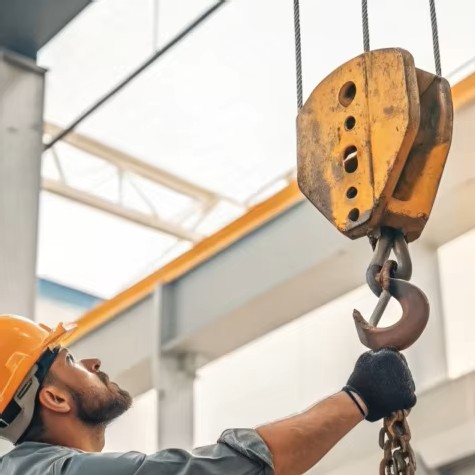
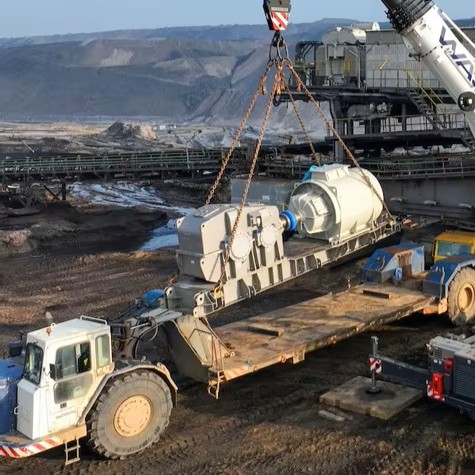
Determine the weight of the heaviest load to be lifted and add a 20–30% safety margin, then choose the nearest standard rated capacity. Next, measure the required lifting height to determine the chain length. Load capacity forms the foundation of the model selection — get these two figures right first.
Choose the appropriate working class (M3/M4/M5) based on the number of daily operating cycles and the intensity of use. For occasional, light-duty applications, an economical model suffices; for high-frequency, continuous production line operations, a higher working class is essential — otherwise the motor and brake are prone to overheating and premature failure.
Choose a fixed-type hoist when no horizontal movement is needed; a manual trolley model for occasional, light-load, short-distance travel; and an electric trolley model for frequent, heavy-load, or long-distance movement. Your travel requirements directly determine the appropriate trolley configuration.
Choose a low-headroom model when ceiling height is limited, to maximize the effective lifting height. For special operating conditions such as chemical plants, dusty or high-temperature environments, and outdoor use, models with explosion-proof ratings or higher ingress protection are required, along with matching site voltage and control options.
The motorized trolley travels automatically along the rail, and combined with wireless remote control, completes lifting, traversing and positioning without manual pushing — significantly reducing labor intensity.
The high-performance motor and compact control system optimize the body structure, maximizing the load lifting height in confined spaces and adapting well to low-ceiling workshops.
Input voltage is selectable within 220–460V, with a standard 36V safety control voltage (24V/48V optional), meeting the power supply and safety standards of different countries.
It can be used independently or integrated with monorail suspension, cantilever cranes and KBK workstations — widely applied in assembly lines, single-station lifting and wind power equipment maintenance.
It can be integrated with various intelligent control systems to enable remote control, interlock protection and other customized configurations, meeting the individualized needs of different users.
Suitable for high duty classes (M4/M5), it maintains stable travel even at heavy capacities, ideal for continuous production line operations, with reliable braking and long service life.
What capacities does the DLDME trolley hoist come in?
The DLDME series covers 0.125 t to 2 t capacity, all with a standard 3 m lifting height and a maximum of 9 m (3/9 m).
How fast does the DLDME hoist lift?
Dual-speed lifting across the range: standard models lift at 8/2 m/min, high-speed models up to 13/3.2 m/min, and fine-positioning models at 4/1 and 6.5/1.6 m/min, powered by 0.4 kW to 1.5 kW dual-speed lifting motors.
How fast does the electric trolley travel?
Models up to 0.6 t travel at 20 m/min, powered by a 0.25 kW travel motor; the 1 t and 2 t models feature dual-speed travel of 11/20 m/min, powered by a 0.4 kW travel motor.
What voltage and frequency does the DLDME support?
The DLDME series accepts 3-phase 220–460 V input power, 50/60 Hz, suitable for global power supply standards.
What I-beam sizes can the DLDME run on?
Compatible with I-beams of 58–153 mm for models up to 1 t, and 82–178 mm for the 2 t model, with a minimum turn radius of 1300 mm (800 mm for the 1 t and 2 t models).
Tell us your capacity, lifting height, and working‑condition requirements — we'll confirm the correct model and send pricing.
Request a Quote
Dele electrical(HANGZHOU) co.,ltd


 sales@delelifting.com

 +86-13868020452


