

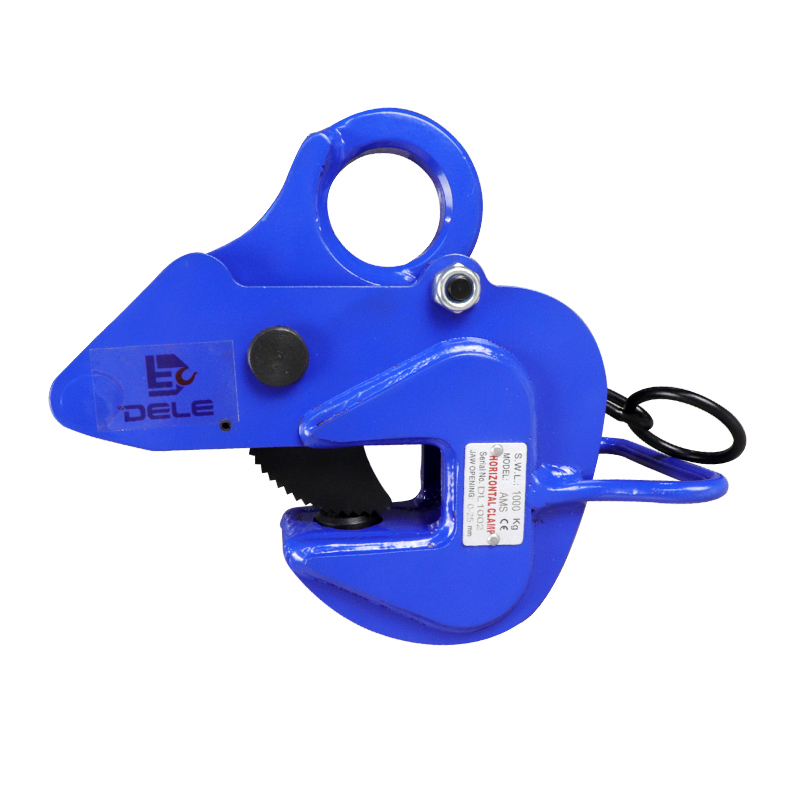
Lifting clamps are essential material-handling tools used to safely lift, move, and position heavy metal plates, sheets, beams, and other industrial loads. They provide a practical solution for handling materials that are difficult or unsafe to move manually.
Choosing the right lifting clamp depends on several factors, including load type, lifting direction, working load limit, material thickness, gripping capacity, and the intended application.
For construction, manufacturing, fabrication, warehouses, shipyards, and other industrial environments, selecting the correct clamp is important for both operational efficiency and safe load handling.
A lifting clamp is a mechanical lifting device designed to grip and lift a load securely. Depending on its design, a clamp can be attached to a crane, hoist, chain sling, wire rope, or other lifting equipment.
Industrial lifting clamps are commonly used for handling:
● Steel plates
● Metal sheets
● Beams
● Structural steel
● Fabricated components
● Machinery components
● Construction materials
● Heavy metal products
Unlike conventional lifting methods, lifting clamps are designed to provide a secure connection between the lifting equipment and the load.
For applications that require different lifting methods, DeleLift also provides a range of lifting equipment and rigging equipment for industrial material handling.
Handling heavy steel plates and other metal components can be challenging without the appropriate lifting equipment.
A properly selected lifting clamp can help:
● Improve material-handling efficiency
● Reduce manual handling
● Make lifting operations easier
● Support safer load positioning
● Reduce handling time
● Improve workplace productivity
However, a lifting clamp should always be selected and operated according to its rated capacity and manufacturer's instructions.
Different lifting applications require different clamp designs. The most suitable type depends on the material, lifting direction, load characteristics, and application.
Vertical lifting clamps are designed to grip and lift plates or similar loads in a vertical direction.
They are commonly used for:
● Steel plate handling
● Metal fabrication
● Construction
● Manufacturing
● Workshop applications
A vertical lifting clamp can be particularly useful when a plate needs to be lifted from a horizontal position and moved into a vertical position.
The clamp's rated working load limit and compatible material thickness should always be checked before use.
Horizontal lifting clamps are designed for lifting and transporting plates horizontally.
They can be used in applications where large steel plates or sheets need to be moved while maintaining a horizontal orientation.
Typical applications include:
● Steel processing
● Fabrication facilities
● Manufacturing plants
● Shipbuilding
● Material storage and handling
For larger or heavier loads, multiple clamps may be required depending on the lifting arrangement and manufacturer's specifications.
Plate lifting clamps are specifically designed for handling metal plates and sheets.
They are commonly used in steel fabrication and industrial manufacturing environments where large plates need to be moved between workstations, storage areas, cutting machines, or fabrication equipment.
When selecting a plate lifting clamp, consider:
● Plate thickness
● Maximum load
● Surface condition
● Lifting direction
● Required gripping capacity
● Frequency of use
Heavy-duty lifting clamps are designed for demanding industrial applications involving higher loads or frequent material handling.
These clamps may be used in:
● Heavy engineering
● Steel manufacturing
● Construction
● Shipyards
● Industrial fabrication
● Machinery handling
The correct model should be selected based on the actual working load and operating conditions rather than simply choosing the highest-capacity clamp available.
Most lifting clamps use a gripping mechanism that holds the load as lifting force is applied.
The clamp is connected to a lifting system such as a crane or hoist. When the load is lifted, the gripping mechanism engages with the material.
The exact gripping mechanism varies depending on the clamp design.
Before lifting, the operator should ensure that:
The clamp is suitable for the load.
The load surface is appropriate for the clamp.
The clamp is positioned correctly.
The rated capacity is not exceeded.
The lifting equipment is correctly connected.
The load is balanced before movement.
Following the manufacturer's operating instructions is essential for safe lifting.
Selecting the correct lifting clamp involves more than checking the maximum load capacity.
Determine the maximum weight that needs to be lifted.
The selected clamp must have an appropriate working load limit (WLL) for the intended lifting application.
Never exceed the manufacturer's rated capacity.
For plate lifting clamps, material thickness is an important specification.
A clamp designed for a particular thickness range may not be suitable for thinner or thicker materials.
Always check the manufacturer's specified gripping range before selecting the product.
Will the material be lifted vertically or horizontally?
This determines whether you need a:
● Vertical lifting clamp
● Horizontal lifting clamp
● Specialized plate clamp
● Other application-specific lifting clamp
Using the wrong clamp type can create unnecessary safety risks.
The condition of the material being lifted can affect gripping performance.
Consider whether the surface is:
● Clean
● Painted
● Oily
● Rusted
● Wet
● Rough
● Smooth
The clamp should be suitable for the actual surface condition specified by the manufacturer.
The best lifting clamp for industrial applications depends on how frequently the equipment will be used and what type of material is being handled.
For example, a fabrication workshop may have different requirements from a construction site or steel manufacturing facility.
Understanding the complete lifting application helps identify the appropriate clamp configuration.
Lifting clamps are often used as part of a complete lifting system.
Depending on the application, they may be connected with:
● Lifting chains
● Chain slings
● Wire ropes
● Shackles
● Cranes
● Hoists
● Trolleys
If your application requires chain-based lifting equipment, you can also explore DeleLift's lifting chains for suitable material-handling applications.
For powered lifting operations, DeleLift also offers electric hoists designed for industrial lifting applications.
Traditional lifting methods may require additional slings, hooks, or manual positioning depending on the load.
Lifting clamps provide a dedicated gripping solution for specific materials and applications.
The main advantages can include:
● Quick attachment
● Efficient load handling
● Compact design
● Easier plate handling
● Reduced manual handling
● Compatibility with common lifting systems
However, lifting clamps are application-specific equipment. They should not be treated as a universal replacement for every lifting method.
Lifting clamps are used across many industries where heavy materials need to be moved safely and efficiently.
Construction companies use lifting clamps for handling structural steel, metal plates, beams, and fabricated components.
Steel processing and manufacturing facilities use steel lifting clamps to move plates, sheets, and other heavy steel products.
Fabrication workshops can use plate clamps to transfer materials between cutting, welding, machining, and assembly operations.
Shipyards handle large steel plates and structural components that require suitable lifting equipment.
Warehousing and Material Handling
Industrial warehouses may use lifting clamps with cranes and hoists to move heavy metal products.
Manufacturing facilities use lifting clamps to handle machinery components, fabricated parts, and heavy materials during production and assembly.
Correct equipment selection is only one part of safe lifting.
Before every lifting operation:
● Inspect the lifting clamp for visible damage.
● Check the clamp's working load limit.
● Confirm the gripping range.
● Ensure the contact surface is suitable.
● Position the clamp correctly.
● Make sure the load is properly balanced.
● Do not exceed the rated capacity.
● Do not stand under a suspended load.
● Follow the manufacturer's operating instructions.
● Perform required inspections and maintenance.
Damaged or worn lifting equipment should not be used until it has been properly inspected and approved for service.
When purchasing lifting clamps, businesses should consider more than price.
A reliable lifting equipment manufacturer or supplier should provide clear information about:
● Working load limits
● Product dimensions
● Material compatibility
● Gripping range
● Lifting direction
● Product specifications
● Quality requirements
● Inspection and maintenance
● Application suitability
Choosing the correct equipment from a reliable supplier can help businesses improve material-handling efficiency while supporting safe lifting practices.
DeleLift provides a range of lifting and material-handling equipment for industrial applications, including lifting clamps, lifting chains, electric hoists, manual hoists, wire rope winches, trolleys, lifting tripods, hand pallet trucks, and rigging equipment.
Whether you are handling steel plates, machinery, construction materials, or other industrial loads, selecting equipment according to the application, load capacity, and operating conditions is essential.
Explore DeleLift's lifting clamps to find equipment suited to your material-handling requirements.
Lifting clamps are used to grip and lift materials such as steel plates, sheets, beams, and other industrial components using cranes, hoists, or other lifting systems.
Vertical lifting clamps are designed for lifting loads vertically, while horizontal lifting clamps are designed for moving plates or similar materials in a horizontal position.
Consider the load weight, material thickness, lifting direction, surface condition, gripping range, working load limit, and application requirements.
Yes, suitable lifting clamps can be connected to compatible lifting chains or other approved lifting equipment, provided the complete lifting arrangement meets the manufacturer's requirements.
Yes. Plate lifting clamps are commonly used for handling steel plates and sheets in construction, fabrication, manufacturing, and steel-processing applications.
Choosing the right lifting clamp is essential for efficient and safe handling of heavy materials. The correct product depends on the load weight, material thickness, lifting direction, surface condition, working load limit, and operating environment.
From vertical and horizontal plate handling to demanding industrial applications, the right lifting clamp can make material handling more efficient and practical.
If you are looking for lifting clamps for industrial applications, review the technical specifications carefully and select equipment designed for your specific lifting requirements.
Explore DeleLift lifting clamps or contact the team to discuss your industrial lifting requirements.

Dele electrical(HANGZHOU) co.,ltd



 sales@delelifting.com

 +86-13868020452


